 Instrument, parts & reeds
Instrument: Tone holes and key system

When comparing a modern clarinet and a recorder, the first thing that obviously is different (next to the colour of the wood and the size) is the clarinet's key system. It looks rather complicated and it sure is. Short and long levers, blocks, axes and tubes move long and short keys, which having pads in the end covering tone holes. Some even interact in complex ways.
For somebody who does not play the clarinet (or the oboe or bassoon which have got a very similar system), it appears to be confusing, and many players, too, couldn't definitely say which keys would open in detail when they play a certain note. We players have just learned how to do the fingering, and we do that now without much thinking about it.
You need the clarinet's keys in order to do what you can do on the recorder just using fingers: Opening and closing the tone holes. In order to work properly, a key must close the tone-hole completely tight - when closed, no air should go through it. It should give as little resistance to the air flow as possible when open - this requires a key-pad to open to a distance that is at least a third of the diameter of the tone-hole. Then keys must open and close quickly - that is really quick; and for both directions: One move is done with your finger, usually this is no problem, but then a spring has to put the key back into exactly the same position it was before. Don't forget that some keys open AND close different holes at the same time - and some levers are long! Bass clarinets have got mechanics that move pads about half a meter away. This requires springs to be strong and the axis to have as little friction as possible.
Pads must work wet and dry, make no sound of themselves and must be extremely reliable. They must be acoustically neutral, too, that is, they must not influence the instrument's sound. Your own fingertips would do all that - and thinking about that, it becomes a challenge to beat fingertips when it comes to closing tone holes. Wind instrument builders of all times had to find ways to solve this.
As we discuss it, you will find there are indeed "fingers only" solutions at least when closing upper tone holes, when playing the smaller clarinets like Eb-flat and B-flat. But you can't do this with all holes for three reasons:
- because the limited hand span is not enough to cover the whole clarinet, that is the tone holes all way down
- the larger tone holes should be large, too wide for normal finger tips,
- (and most importantly) you would need more than ten fingers to operate the instrument - you will see why that is below; and this is unique for clarinets.
So in consequence clarinets depend on keys - instruments without keys can't be clarinets.
Contents
Tone holes - too far away and to wide for fingertipsWhy does the tone become higher when opening a tone hole?
Clarinets must have more tone holes than other wind instruments
Play higher registers: Overblowing with the speaker hole
Play half tones by forking
Lowering tones by "covering"
Play half tones with additional tone holes
Open and closed keys
Requirements keys must meet
Key development in history
Modern tone holes: No simple drill job
Key materials
Pads
Springs
Key differences Boehm vs German
Keys and acoustics
Some thoughts about optimal keys
Tone holes - some are too far away and too wide for fingertips
The smaller members of the clarinet family, the E-flat and the B-flat, do have simple tone holes that you can close with your finger tips, much like a recorder. But even with the smaller instrument types the lowest holes - that are way down - cannot be closed with your fingertips only. The larger the instrument, the further away the tone holes. And you will see that tone holes for lower tones are wider than your fingertips, which is acoustically helpful.
In modern clarinets, some of the key mechanics are designed to close tone holes at places where a finger couldn't go easily. You want to have the tone holes at the optimal position rather than drilling them where they can be used based an average player's anatomy. Optimal positions would be a straight line down facing the audience, including the thumb-operated speaker key, a hole that usually faces the player.
Why does opening a tone hole change the tone?
Simplified: When playing, the air column in the bore swings - comparable with a guitar string; and this swinging is passed on to the surrounding air, which in turn reaches our ears and can be heard as a sound. When the guitar player makes the swinging string shorter by pressing the string down, its swinging movement becomes shorter (because the speed of swinging itself remains) and a shorter swinging translates into a higher frequency, so the tone becomes higher. When he moves the finger further up, the swinging part of the string becomes longer again, the tone becomes lower.
Practically this means: Half the length of a string = doubled frequency = an octave higher.
This is practically the same with wind instruments, only that there is no up-and-down-swinging string, but a forward-and-backward-swinging pressure wave in an air column within the instrument's body between mouth piece tip and the opening at the bottom (making things a bit more difficult to watch and understand). Bends within the instrument show little influence to this as long as the diameter of the bore is not affected, so larger clarinets (Alto, Bass, Contra) and bassoons have bended shapes, which helps handling them. The complete length of the swinging air column depends on the length of the instrument as such - as long as all tone holes are covered. The moment that one tone hole is opened (and if it is wide enough to let most of the swinging air column stream out of the instrument's body), the length of the swinging air column is reduced to roughly the distance between the reed's tip and the tone hole. So - simplified - when you open a sufficiently large tone hole this means nearly the same as reducing the instruments overall length.
Clarinets need more tone holes than other wind instruments
In order to understand the tone holes and keys of a
clarinet, let us at first take a look at the much
simpler design of the soprano recorder, that has no keys at all and (usually) eight tone holes.
Many people have learnt to play this simple wind instrument as first instrument in school.
Of the eight tone holes seven are on the front and one - the speaker hole or octave hole - is on the back
where you have your left thumb. With this instrument you can play all notes of an
octave.
The lowest not - C - sounds, when you blow into the mouthpiece with all holes are closed.
When opening one tone hole after the other starting from the bottom one you have a scale in C: C - D - E - F - G - A - B
(or in romanic cultures: Do - Re - Mi - Fa - So - La - Si.)
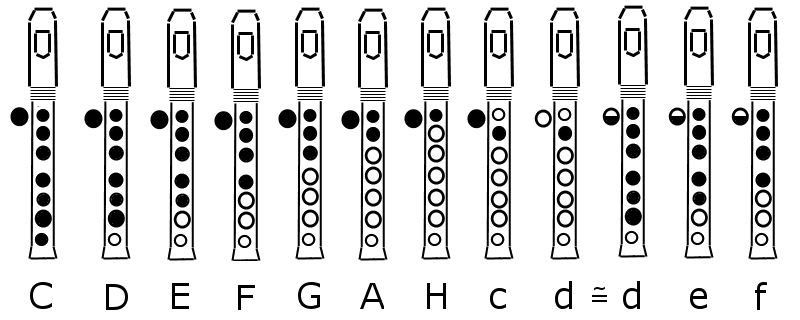
Scale on simple recorders - for better instruments fingering may be different!
Seven tone holes at the front - the octave- or speaker-hole is the circle at the side.
Black = closed / white = opened / half = half opened
You can play the high c and d via "forked fingering", this will be explained below.
Play higher registers: Overblowing with the speaker hole
When you open the overblowing - hole (speaker hole) half way (with your left thumb) and play the same scale, the instrument produces the same notes, but exactly one octave higher.
One octave higher equals eight notes on the scale and this means a doubling of the frequency. For us it appears to be the same tone, just higher. A C remains a c, a G remains a g. And fingering is very simple because of that - you use the same fingering for the notes in the upper and lower register.
In order to make the speaker hole work as such and not as an ordinary open tone hole, that would result in a very sharp high tone, the overblowing hole must be much smaller than an ordinary tone hole. Recorder players reach that by half-covering the hole. What it does acoustically, is: There is not only one frequency, but in reality a row of octaves above the base frequency. You just don't hear that so clearly. Now the half open register key is "destroying" the lowest frequency of the recorder sound, and only the next overtones (octaves and multiples) remain, resulting in the tones sounding an octave higher. These were present in the low register, too, but not so dominant (see overtones).
As said above: If the overblowing hole was too wide, the swinging air column would exit the instrument here as it would with every other tone hole, and this very high tone would remain, independently of what holes below were closed or opened. Therefore the overblow- or speaker-hole is very narrow (clarinet, oboe) or you only open it half (recorder).
The switch into the octave when opening the overblowing hole is the same not only for recorders, but all other wood wind instruments like saxophones, bassoons oboes. The clarinet is the exception to the rule: It has got an overblow hole much like all other woodwinds, and it works the same way, but when opening this hole, the frequency is not doubled, but it becomes 2.5 fold. In notes on a scale, this is not the 8th, but the 12th note (because doubling means the 8th note on a scale, 2.5 - which is doubling plus a half is 8 plus 8/2 = 8 + 4 = 12). In Latin this is called duodecime: octava means 8th, duodecima (~dozen) means 12 .
Above I have mentioned that opening the overblowing-hole the lowest frequency, that is the one that we hear consciously, is destroyed, while the next higher strong frequency can now be heard prominently (and all others remain intact as well). The sound of an instrument or voice does not only consist of one frequency, but a row; which are connected in a mathematical relation; usually - with recorders, oboes, saxophones and most other wind instruments like 1 : 2 : 4 etc. - this are even numbered relations.
But with a clarinet - for acoustical reasons - the relations of the sound waves produced are different, they create waves in relations like 1 : 3 : 5 and so on, so they are odd numbers. Mathematically 8 : 12 is the same as 2 : 3.
So now when you use the fingering for a C and open the overblowing hole on a clarinet, what you hear is not a high c, but a g. So far so bad. A scale and a fingering chart for a clarinet now looks like this:
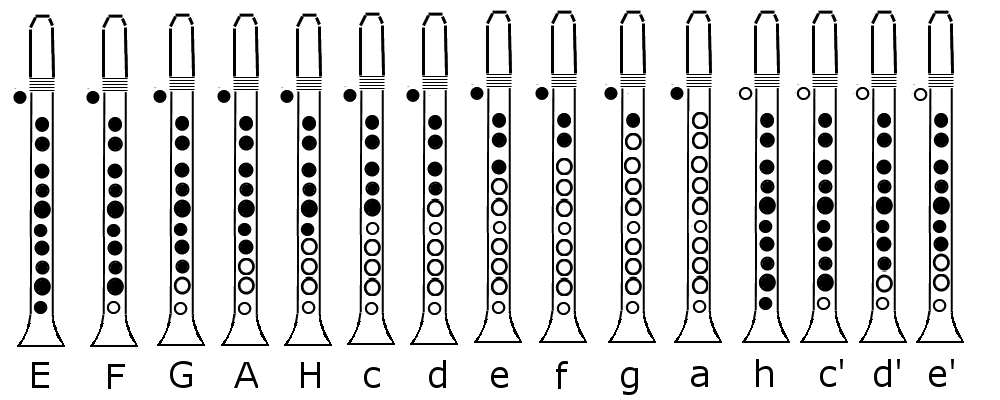
Scale on a simple clarinet without holes for half-tones.
Black = closed / white = open.
You need either 12 fingers or 2 keys ...
In practical life this means: The most simple clarinet with tone holes for just a scale in the key of C with no #-sharps or b-flats needs more tone holes than a recorder, because where the recorder already plays the eight note of the scale with the fingering for the first; the clarinet needs additional tone holes for the note 8, 9, 10 and 11. So you need at least 10 tone holes plus an overblowing hole; adds up to 11 holes. And in real life you need at least one finger (usually the right hand's thumb) to hold the instrument, even when it is placed on the ground like a bass clarinet. That means you only have 9 fingers to operate 11 holes. In result that means in order to build a clarinet, you need at least two keys.
That is what you find at the first clarinets: Two keys, a long one for the lowest note, and an overblowing or speaker key. Because we have to operate the instrument and its 11 holes with 9 fingers, some fingers have to do double function jobs.
Creating half tones - method one: Forked fingering
Some wood wind instruments - like the recorder - will produce a pleasant scale in their "native" key with simple fingering, like shown above. On the piano that would be the white keys only. But with a scale in just C you can't play much more than the simplest of children's songs - even they sometimes need half tone steps (on a piano the black keys), and classical music that comes in several keys and lots of sharps and flats would be impossible. One way - and in old music that was common indeed - would be to have an individual instruments for every common scale. But that is expensive and not very practical and doesn't work with more modern music (younger than 400 years, that is). So the recorder player uses forked fingering - and most players of older wood winds have to do the same.
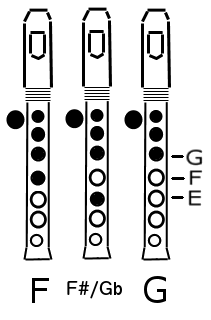
How does it work?
Let's say you want to play a G-flat - which is half a tone lower than G. You use the fingering for G and close the tone hole not one below, but two below, leaving the hole one below G open. This results in a quite well tuned G-flat.
Why is that - and why does this not produce a mixture between a bad G and an E, as you might have expected?
The swinging air column will exit out of the open (forked) tone hole, in our case the F-hole, but only partly. Below the tone hole - but still within the bore - it continues to swing, but now we have an air column consisting of two parts, that is related via a node, just behind the opened tone hole. The lower (smaller) part continues down to the D-hole. Physically speaking this is being added to the existing column for about half the distance between forked hole and open hole. That produces a surprisingly well tuned G-flat.
Forked fingering only works as long as the forked hole is not too wide, very much like the overblowing tone hole (or speaker hole). Otherwise the air column would exit the instrument fully and we would have a badly sounding (a bit too low) G. In order to prevent that, players sometimes half-cover the forked holes, or the designer has build special ring keys for this purpose.
Lowering tones by "covering"
If you cover further tone holes below, for example the D-hole, the tone will sound even lower. It is the same effect as with forking, and it works as long as the number of tone holes you leave open is not to large (two, up to three open holes may still work). So this helps you lowering otherwise too high sounding notes. Many players will find that the tuning of their instrument becomes higher in ppp than in a solid forte, and this technique may be more reliable than changing the tuning with the embouchure. Of course this may reduce the sound quality somewhat, so you have to find a compromise, but then - compared to being not in tune in a unisono-passage with a flute - the sound quality may be less important to you...
Create half tones with additional tone holes
Forking works, and it works well, especially in practical playing. Nevertheless it has its disadvantages: Tone holes, that you use for forking, must not be too wide, because otherwise the swinging air-column will "break out" of the instrument and there will be no swinging node (and this may depend on the hight of the tone, the loudness, the tone you played just before etc. etc.). But a smaller tone hole has its disadvantages, when it is used as a normal tone hole; then it should be as wide as possible. Because that is difficult to construct, the instrument builder will always settle for compromises, but those are often unfortunate and all this will make forking less than optimal.
We have now learnt that the classical tone hole is not only "open" or "shut", there is a third state: "reduced". Every recorder player knows that. Now you can understand, too, why the overblowing or speaker hole is so small - you open it only as far as necessary to let a part of the swinging wave break out (lower frequencies) and another part go on within the bore. And that is why some clarinets have got keys that have a very small hole drilled into the key and pad - that is in order to produce a "half open" state, for example for the high "c".
Unfortunately the size of tone holes depends on the register, because the acoustical impedance becomes more prominent the higher the frequency is. In the clarinet register forking works less optimal than in the low chalumeau register.
In consequence modern clarinets use for nearly all half tones extra tone holes, and forking is reduced. There are even mechanical tricks that let the player fork, but the mechanic translates that into opening a tone hole instead. All this results in five more tone holes per octave than a recorder would need:
C - C# - D - D# - E - F - F# - G - G# - A - A#(Bb) - B
The additional tone holes correspond with the black keys on the piano keyboard (for 8 white ones you have 5 black ones). Because the clarinet has not only got an octave per register, but a duodezime, that is 12 tones, there must be not only 5 but 7 tone holes for the "black keys"; that is: there are minimum 19 tone holes for a simple scale. And that is if the lowest and topmost tone is the same (which isn't in modern instruments):
E - F - F# - G - G# - A - A#(Bb) - B - c - c# - d - d# - e - f - f# - g - g# - a - a#(b)
Adding the overblow hole, you can forget wanting to close all those holes with fingers only! When I started learning to play the clarinet I had a simple student model soprano clarinet (German model), and only the speaker tone hole had no key and key pad. But then there were a lot of resonance- and improvement keys. Between 22 and 28 keys are standard for the German system, the Boehm has got some 20 keys and 5 rings.
Open and closed keys
When you examine a clarinet (or other woodwinds) you find that they have open and closed keys; that is: When you press the key or lever, some open the tone hole and others close a tone hole when pressed. Open keys are the same as tone holes on a recorder: You would close them with you finger, but here you have got a key for that. But what are closed keys good for? Why would you need keys that open a tone hole when you press them?
In the first place closed keys are used for half tones (C#, D#, F# etc.) - on a piano keyboard that would be the black keys.
Certain closed keys are good as alternativ way to open keys (jumps and tremolos) or for correcting the tuning. They sometimes open automatically, when pressing down other keys.
Requirements keys must meet
Keys must make sure that
- tone holes can be closed perfectly: When closed a key must not let any air escape the instruments body through the tone hole
- tone holes are fully open and impose no acoustical impedance for the streaming air, this is achieved by choosing the largest possible diameter of the tone hole (and the key); plus the key must go up at least a third of the tone hole's diameter. If the lowest key that is actually open is not far away enough from the tone holes surface, then the tone will not sound well or even be significantly to low. This is the same as the covering technique described above.
- opening and closing of keys must be quick - that is especially critical in the case of the open keys - the ones that are opened by pressing with a finger and closed by a spring pressing the pad back onto the hole. The force of the spring must be sufficient to work quickly and there must be no friction in the bearing.
And then, too, keys must not click, squeak - they should always work completely silent.
All this can be achieved rather well using modern keys and frequently maintaining them.
Keys development in history
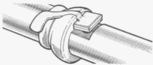
Early keys were far from perfect and simply a prolongation for the fingers to reach holes too far away; they were metal levers with a piece of felt glued to a square end. This type of key was - of course - never perfectly tight, and obviously only worked when the felt was damp. A key with a flat pad made it necessary to sand the surface around the key hole flat, and those tone holes were relatively small.
The first major step which made the modern clarinet possible was the invention by instrument builder Iwan Müller who invented the "salt-spoon-key". In connection with the sunk in key hole the new key could close holes nearly perfectly. His design is the one we still use today. We will look at the improvements in detail below.
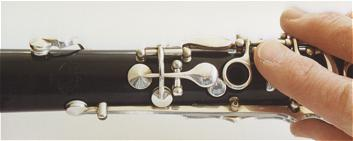
The second essential improvement was the ring key by Klosé. A "ring" is a key with an opening - shown on the photo next to the forefinger. With a ring key you can close holes that are in reach of your fingers but since this enhances the diameter of your fingers, the holes can be drilled to the acoustically optimal size (which you could not close with fingers alone).
The key system of the modern clarinet is an ingenious mechanical masterpiece that has been continually improved over centuries. With it, all tone holes can indeed be opened and closed almost silently and quickly, no matter where they are located. In some cases, the key actions work around the instrument, while in others the keys are operated by simple levers or turning tubes.
After this there came numerous steps that you can sum up as mechanical connections between keys that make trills and jumps possible that otherwise would have been very difficult or impossible. However, the key mechanic also adapted to the habit: For example one still grips forks while the key mechanic turns this into an acoustically better result.
Modern tone holes: No simple drill job
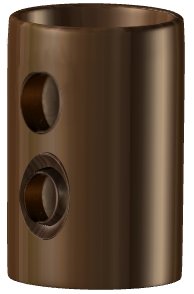
You hardly find any tone holes in your clarinet that are similar to the ones of a recorder - on the picture left it is the upper tone hole. These are the ones that you have to cover with fingertips, All other tone holes, that are covered by keys with pads, look differently: They are sunk-in, that is: they are in a bowl-shaped indention and the hole itself is surrounded by a ring-shaped border with a sharp edge. The lower tone hole on the picture is one like that.
Sunk-in tone holes are necessary, because the surface of the simple tone hole is not flat but bent - like the surface of the clarinet's body. With a flat pad you cannot close a tone hole that is the result of a simple drill job. Producing a perfectly fitting bent pad that has exactly the shape of the clarinet's body would be possible today, but still a sunk in hole would be much better for use and makes the key maintenance simpler.
The most simple and practical solution was to make the surface around the tone hole flat - that is, what Denner and other early instrument makers did. You can see it on the picture of the ancient key above. But to close a tone hole with a leather pad, a ring-shaped border around the hole is suited much better than a flat surface: The sharp edge will press into the soft surface, making it fit even better. The key with the soft leather pad will close the tone hole even if the pad is not aligned perfectly. In order not to carve out too much material, the instrument maker only sinks in a flat bowl-shaped area around the tone hole (about 2 mm or 1/10 inch).
Key materials
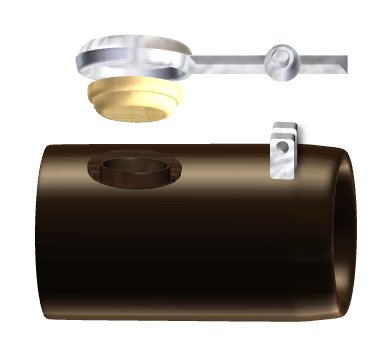
In general the metal parts of the key system consist of German silver cast parts. That is a copper-based alloy. When long turning keys are made, steel tubes are soldered onto the keys, usually using silver lead. Really expensive instruments have forged keys which are less prone to breaking than cast keys (and then again hand-forged are better than drop-forged, where a huge weight falls onto the metal to forge it into form). Since all these metals can be soldered with silver lead, they can be repaired easily. Most clarinet's metal parts are silver-plated, some are nickel-plated or gilded. This is done in electroplating baths. The coating materials have pros and cons:
- Silver - the most common - looks nice, but may tarnish, primarily in contact with sweat
- Nickel doesn't tarnish, is durable, glides well, is cheap, but unfortunately Nickel can trigger allergies (this is quite frequent - so you better keep your hands off Nickel!)
- Gold does neither tarnish, is good for gliding, but expensive and looks unusual (could be problematic in case a uniform look of instruments is favourable, because there are frequent TV performances ;-)
Pads
Clarinet pads are traditionally made of leather, felt and cardbord, but today you find silikon (the elastic material), too, sometimes cork and more recently other synthetic material.
Leather pads
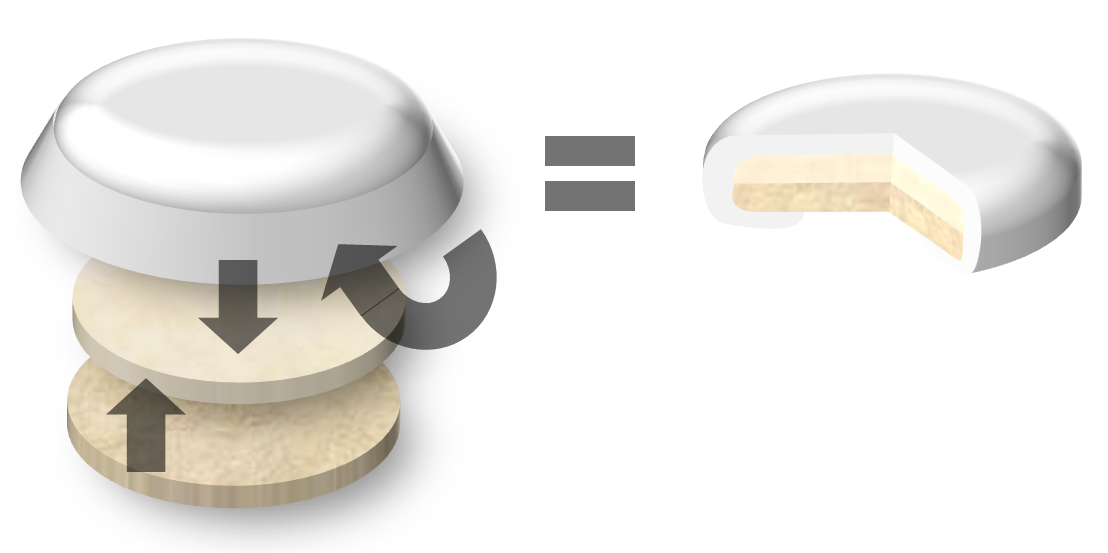
Leather pads have dominated for hundreds of years, and are still more practical than most other types. They are made of a round cardboard plate as base (in the picture the cardboard is the bottom part) and a felt plate (in the middle) of the same size. Over that the manufacturer fixes a thin, soft leather coating. Originally that was a fish skin (flutes still use that). The leather is usually died white for clarinets, and is golden brown for saxophone pads. That type of pad can be bought in all sizes even in not so specialised music shops - they are the same for clarinets, saxophones and oboes. What matters is the strength and even more the diameter.
Leather pads do have advantages: They work well, they are usually tight, and they tolerate slight imperfections of the key because - when becoming wet - they will adapt to the tone hole again. The sharp ring shaped border of the sunk in hole will press in into the soft moist leather. Leather pads are easy to fix onto the keys and they can be removed as easily. You use seal wax (the traditional way) or hot-melt glue for this. You find a "how to" under Repair / First Aid.
The main problem is that slowly start to sound bad when getting too old - the leather then gets brittle. Then, at the latest, you have to change the pad or have them changed. The more frequent a leather pad gets wet, the sooner this will happen. That means that the pads high up on the clarinet usually have to be replaced more often than the ones down that hardly ever will need that. As a rule of thumb it is good to have your instrument maintained once a year if you play much (like 5 - 10 hours a week) or every second year if you play less; and that is when the upper pads should be replaced.
Silicone pads
Today you will find a lot of pads are made from elastic silicone, similar to what is used to glue tubes to your bathtub or sticks sheet glass together as an aquarium. Silicon has got advantages: It can be brought into every form, is elastic and does not change under humidity. It will last and stay in form forever (that is: longer than your clarinet's body) - so it never will have to be changed. The advantage is a disadvantage at the same time: It will not change its form; so if the key is bent a bid, then the pad will not be placed perfectly over the tone hole and will fail to close the hole. Sometimes it will still do as long as its surface is still wet, but when it dries a bit, it will no more. A leather pad would adapt itself and you wouldn't even notice. Some musicians think that the tone will be influenced negatively - but serious tests have found out that in the long run the majority of listeners will prefer the sound of a clarinet with silicone pads to one with leather pads (except when the leather pads are new, not much older than a couple of months - since they do degrade quickly).
Besides issues with bent keys there are two more disadvantages that silicon pads have:
- since silicon does not stick to most materials after it has "hardened" you can not easily glue a pad that has fallen out back into place, especially not if this happens just before a concerto. You can, too, glue in special silicon pads with thermo glue - so we can expect to see this become more frequent. Another solution are silicone pads that have a base made of a different material, onto which the glue is then applied, which will make standard procedures the same as with leather pads.
- since silicon does not absorb water, the quantity of water on the clarinet's wooden corpus that is covered by the pad can not evaporate except through the wood. That is it will stay there for a long time. That may cause serious problems for the tone hole if you store your instrument away without having wiped it out fully.
A new development are so-called quartz resonance pads - they are said to be superior to leather pads in terms of acoustic properties and at the same time last much longer. The German manufacturer gives a five (!) year warranty. However, they require precisely machined keys and tone holes and - like silicone pads - must be fitted very precisely. In addition, they are - just like silicone pads - susceptible to bending of keys, because they also do not adapt. It remains to be seen whether they will become a top standard. At least the theory looks good.
Cork pads
Cork pads are still used where a leather pad would be unpractical - and where you expect a lot of moisture like the duodezime-key on the bass clarinet. Cork is not bad as pad material, easy to repair, easy to handle, but it is not fully elastic - slowly but surely the material becomes and remains compressed. It probably will be fully replaced with silicon in the future.
Innovative pads
Most of the new developments like the silicium resonance pad are acoustically superior to most pads that exist today except for new leather pads. But they require extremely precise keys that must not bend easily (because the pads are neither very elastic nor do they adapt) and they need sharp and precisely inlet key holes. This is not always given with your standard clarinet today (except for very expensive models).
Springs
All keys use springs, either to open the key and keep the key open when not pressed or to close it when released -
depending on the function of the key. They come in two technical types:
the sheet spring and the needle spring.
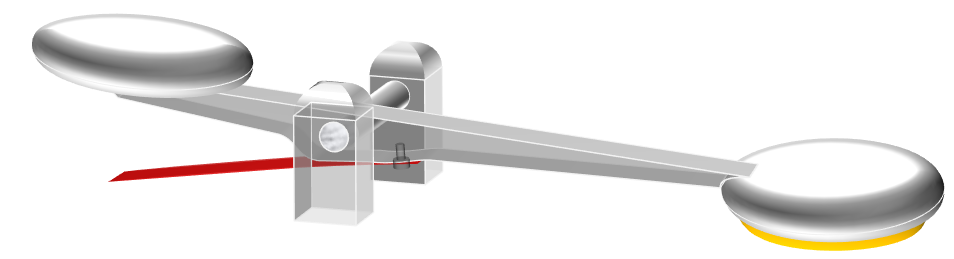
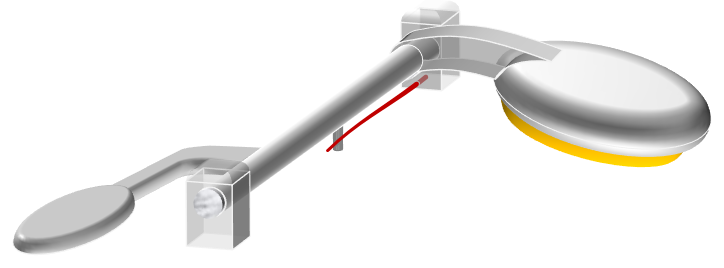
The sheet spring is most widely used with flip keys. It consists of a flat sheet of hardened spring steel, that is screwed against a key. The other end usually presses against the instrument's body.
Needle springs, are most often used to turn a key on an axis. The needle is fixed to a column and presses against a hook soldered to the key. They actually used to be made of sewing needles.
Both types work fine, are simple and robust and can be adjusted with simple tools like a screwdriver and pliers. If you bend the spring further in the direction it presses, the power of the spring increases. If you bend it into the other direction the power is reduced. This can be done a couple of times, anyway, be careful not to break the spring - even if you can replace the needle by an ordinary needle from a sewing set, you will have a hard time finding a fitting one, you can't bend it into form easily and then you won't be able to fix it in the column without help of an experienced instrument maker (let alone the sheet spring - you won't find that in hardware stores...)
Differences in key systems: German vs. Boehm
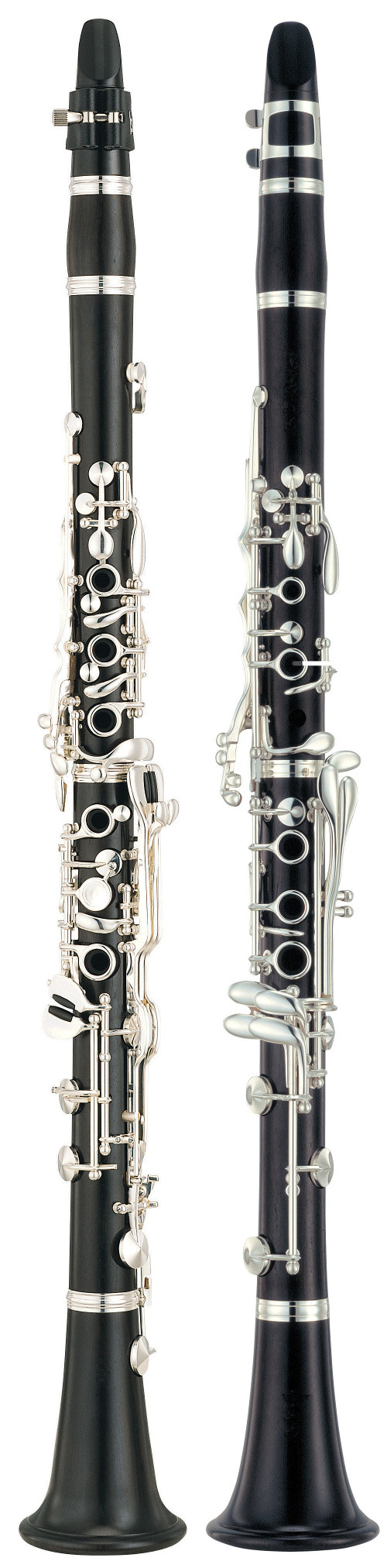
There are some more and some less obvious differences between Boehm clarinets and the German system. This chapter discusses only the key and mechanics aspects. You find a discussion of the systems as such here.
Since you do not speak German (otherwise you should be reading the German version of this website) you are probably used to Boehm systems (except if you are living in an oriental or a Jazz culture, where an old-fashioned type of the German instrument is widely used). So what you probably know, see and hear when you go to a concert or a musical performance is the clarinet on the right. The most obvious different feature that you can even see from far away are four levers for the little finger on the lower joint of the Boehm instrument, whereas the German system has got two wide, silver plated flat fingerrests with Ebony rolls to slide forward and back for the little finger of both, left and right hand.
Another important difference in keys are the very long flip-keys that the German system has in the lower joint. They reach from top of the joint to the lowest key, and often even to a resonance pad on the bell. You operate them with your little finger of the left hand. The Boehm system has replaced those long keys by rotating tubes. That is a significant improvement, because if something breaks on a German clarinet, it is those long flip levers!
Especially when building long levers the combination of needle spring and rotating tube is much more durable, makes less noises and needs less space. Furthermore it will be more reliable when playing. In order to avoid breakage some German instrument designers combined a chain of flip keys, again not so great, because they react sluggish because of the joints. A rotating tube of steel can be quite long and still works precisely.
The latest German style designs replace the long flip keys by turning tubes, wherever possible, and that is especially true for the long keys that bass and contra bass clarinets use. The goal is to make it practical, fast, quiet, but conserve the traditional fingering as far as possible.
The fingering that you use for Boehm instruments mostly avoids "gliding" of fingers from one key to another, especially that of the little finger (which is important for German instrument). Because Jazz players, Oriental and Klezmer players seem to prefer exactly that (it improves the sliding of notes, too) many have kept the traditional instrument and not switched to Boehm, although their classical neighbors have.
Being German myself I have, of course, learnt to play the German system. Today I play a Boehm Bass Clarinet, and comparing the fingering, the Boehm system has got some more advantages than it has disadvantages. There are some more alternative fingerings for the same note, that means, some difficult parts (jumps and trills) can be played more easily, as well as a legato is easier. However, I would not recommend a German who is getting along well with the instrument to change to Boehm just for that reason.
There might be one more point, here, too: For people with small hands and short fingers the Boehm system seems to be a bit easier to handle than the German system.
How the keys affect the acoustics and intonation
When keys are open, they would ideally not hinder the stream of air to go out of the instrument at all. It would theoretically be even ideal if the clarinet ended somewhere on the upper edge of the tone hole (like it would be virtually sawed off here). But, however, the key has considerable influence on the flow of air even when it is fully open - that is easily shown: Do open a ring key by moving your fingertip up for a couple of millimeters and swing the finger up and down. You can hear the effect, but you can even still hear a bit of it if you do the same more than two centimeters (nearly an inch) away from the opening, and of course no key opens that far. This is true for all keys. The position of the key pad has considerable influence on the correct intonation of the instrument. Of course the instrument maker has taken this into account. The tone holes are always drilled a bit further up the instrument's body (towards the mouthpiece) than they would be without this effect. The position of the hole should be correct if one considers a key to have a leather pad which has a distance to the hole surface that equals a third of the bore diameter when fully open. Change the parameters (different material, different distance) and you might get different results.
Some thoughts on optimal keys
Jack Brymer has stated in his excellent book (by the way: a "must read") that the clarinet key opens the tone hole in the wrong place, and he is right: Ideally it would close the tone hole inside the bore, in order to leave one shining, polished, uninterrupted tube with nothing causing air turbulences. When the tone hole is open, the opening should also be as big as possible. The key should open and close the hole in an instance extremely fast and also open fully wide - much like a camera shutter. Since instrument builders and clarinet players are conservative, this may be only theoretical thinking, but from time to time you find revolutionaries in this metier, and micromechanics and electronics have advanced in recent years, so it may be technically possible to construct large mechanical valves that are adjusted to the round bore.